

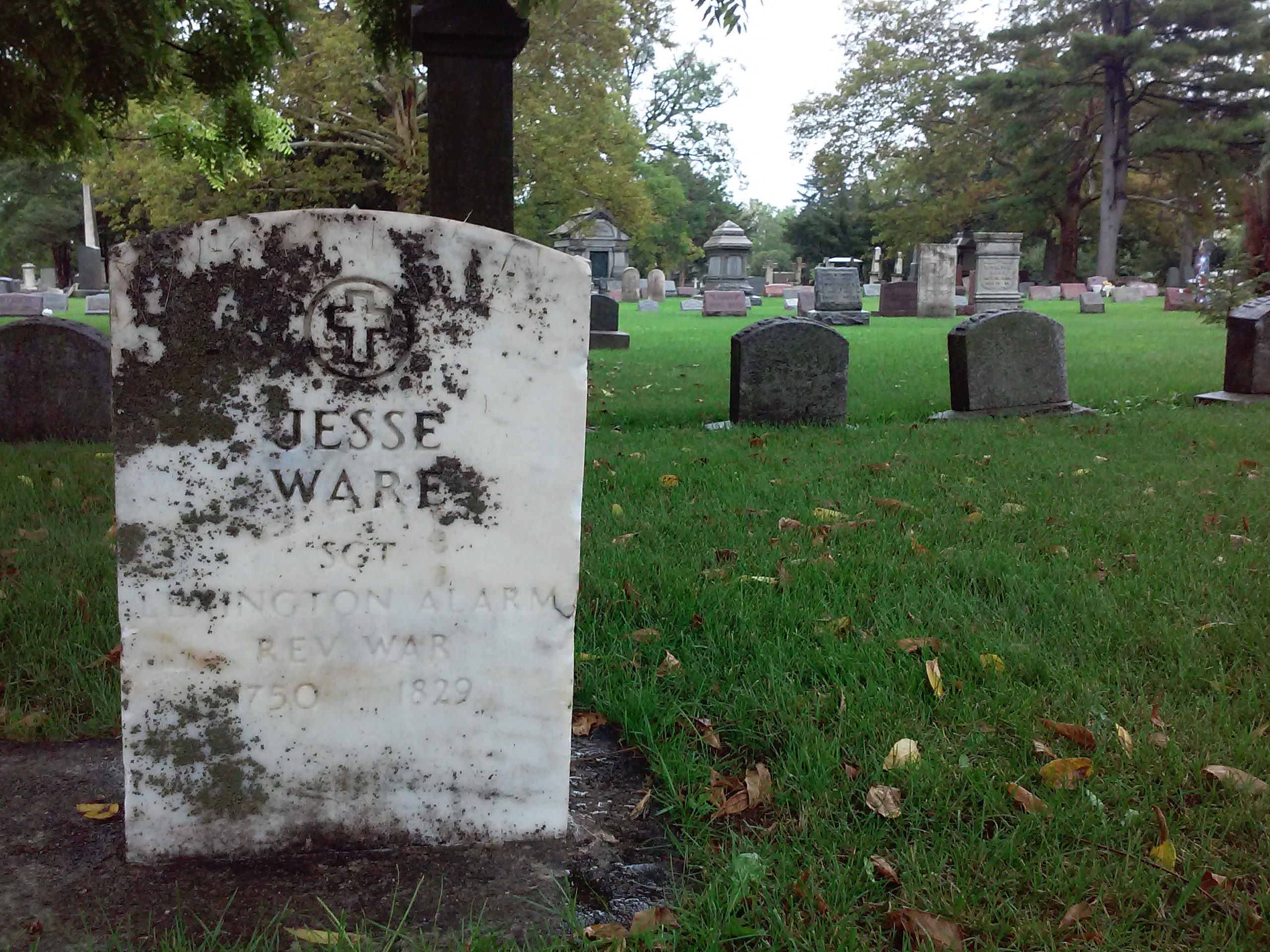
 Photo submitted by Carl Skompinski
Pages 227-230
“TRAGEDY OF THE DEVIL’S HOLE.
There are few of our readers who will not be familiar with the main features of this event. It was fresh in the recollection of the few of the white race, that were found here, when settlement commenced, and Seneca Indians were then living, who participated in it. The theatre of this tragedy — the locality that is figuratively designated as one of the fastnesses of the great embodiment of sin and evil—was in the high banks of the Niagara river, three miles below the Falls, and half a mile below the Whirlpool. It is a deep, dark cove, or chasm. ‘An air of sullen sublimity prevades its gloom; and where in its shadowy depths you seem cut off from the world and confined in the prison-house of terror. To appearance it is a fit place for a demon-dwelling; and hence, probably, derives its name.’ The road along the river bank passes so near, that the traveller can look down from it into the frightful gulf—to the bottom of the abyss, one hundred and fifty feet. It would seem that a huge section of rock had been detached, parting off and leaving the high banks almost perpendicular — over-hanging in fact, at some points. A small stream—the Bloody Run—taking its name from the event of which we are about to give some account, pours over the high pallisade of rock. Trees of the ordinary height of those common in our forests, rise from the bottom of the ‘ Hole,’ their tops failing to reach the level of the terrace above.
Hitherto our accounts of the tragedy enacted there, have been derived from traditionary sources; no cotemporary written statement of it has as yet appeared in any historical work, or in any printed form. Among the London documents brought to this country by Mr. Broadhead, and deposited in the office of the Secretary of State at Albany, is a letter from Sir William Johnson, to the Board of Trade in New York, dated at Johnson’s Hall, (on the Mohawk) September 25th, 1763, to which is appended the following Postscript:—
‘P. S. —This moment I have received an express informing me that an officer and twenty-four men who were escorting several wagons and ox-teams over the carrying place at Niagara, had been attacked and entirely defeated, together with two companies of Col. Wilmot’s regiment who marched to sustain them. Our loss on this occasion, consists of Licuts. Campbell, Frazier and Roscoe, of the Regulars. Capt. Johnson and .Lieut Drayton of the Provincials; and sixty privates killed with about eight or nine wounded. The enemy, who are supposed lo be Senecas of the Chenussio, [Genessee,] scalped all the dead, took all their clothes, arms and amunition, and threw several of their bodies down a precipice.’
In a ‘ Review of the Indian trade,’ by the writer of the above, dated four years after, speaking of this furious outbreak of the Indians, it is said: — ‘ They totally destroyed a body of Provincials and regulars of about one hundred men in the Carrying Place of Niagara, but two escaping.’ There is some discrepancy in the two statements. The first account was probably sent to Sir William by a messenger despatched from Niagara as soon as the affair was known there, and before the full extent of the loss was ascertained. In 1764 the writer was at Niagara, holding a treaty with the Senecas, where he probably learned the facts as he last stated them. The statement that but two escaped the massacre, agrees, as will be seen from what follows, with the traditionary accounts, though the fate of the ‘eight or nine wounded,’ is left to conjecture.
Jesse Ware was the successor of the Stedmans at Schlosser, and before his death related to the compiler of the first edition of the Life of Mary Jemison, the story as he assumed to have heard it from William Stedman, the brother and successor of John Stedman, who was one of the two that escaped. The relation was in substance as follows:—
After the possession of Fort Niagara and Schlosser, by the English, Sir William Johnson made a contract with John Stedman to construct a portage road between Lewiston and Schlosser, to facilitate the transportation of provisions and military stores from one place to the other. The road was finished on the 20th of June, 1763, and twenty-five loaded wagons started to go over it, under the charge of Stedman, as the contractor for army transportation; accompanied by ‘fifty soldiers and their officers,’ as a guard. A large force of Seneca Indians, in anticipation of this movement, had collected and laid in ambush near what is now called the Devil’s Hole. As the English party were passing the place, the Indians sallied out, surrounded teams, drivers, and guard, and ‘either killed on the spot, or drove off the banks,’ the whole party, ‘except Mr. Stedman, who was on horseback.’ An Indian seized his bridle reins, and was leading him east to the woods, through the scene of bloody strife, probably for the purpose of devoting him to the more excruciating torments of a sacrifice; but while the captor’s attention was drawn in another direction for a moment, Stedman with his knife, cut the reins near the bits, at the same time thrusting his spurs into the flanks of his horse, and dashing into the forest, the target of an hundred Indian rifles. He escaped unhurt. Bearing east about two miles, he struck Gill creek, which he followed to Schlosser. See some subsequent remarks upon the claim instituted by the Stedmans, or their successor, to lands, based upon this flight, and a consequent Indian gift
‘From all accounts,’ says the biographer we have relied upon for the above statement, ‘of this barbarous transaction, Mr. Stedman was the only person belonging to this party who was not either driven, or thrown off into the Devil’s Hole.’ Tradition has transmitted to us various accounts of the fate of some few others of the party; that is, that one, two, or three others escaped with life, after being driven off the bank, although badly wounded, and maimed by the fall. Most of the accounts agree in the escape of a little drummer who was caught while falling, in the limb of a tree, by his drum-strap.
Mrs. Jemison says that no attempt was made to procure plunder, or take prisoners. The object, sanguinary as was the means used to accomplish it, was not mercenary, but formed a part of a general concerted plan to rid the country of the English.
The account of Sir William Johnson, which the author, considering that it is both cotemporary and official, is disposed to rely upon, rather than the traditionary accounts, gives a different complexion to the whole affair, than the hitherto generally accredited version. The inference would be from his statement, that the cavalcade of wagons, teamsters, and guard of twenty-four men, was first attacked, and was reinforced after the attack by the two companies, who, he says, ‘marched to sustain them’ This would protract the action beyond a sudden attack, and such a summary result as has before been given; and favor the conclusion that the advance party was first attacked as stated, and that those who came to their relief, shared a similar fate. Though the discrepancy is perhaps not material.
Honayewus, or Farmer’s Brother, an active Seneca war chief in the Border Wars of the Revolution, was in this battle, or rather surprise and massacre. It was one of his earliest advents upon the war-path.
The pioneer settlers upon the frontier, especially in the neighborhood of Lewiston and the Falls, say that at an early period relics of this horrid tragedy were abundant, in this deep gorge. They consisted of skulls, of human bones, and bones of oxen, pieces of wagons, gun barrels, bayonets, &c., &c.”
Page 493
“The Stedman family left Schlosser in 1795, the British portage having been transferred to the other side of the river, in anticipation of the surrender of this frontier. They left Jesse Ware in possession of their home and farm. He in fact not only claimed the Schlosser property, but some four thousand five hundred acres of land beside, including the Falls. He claimed as the successor of the Stedmans, their claim having been founded upon an assumed grant of the Seneca Indians of all the land that lay between the Niagara river, and the circuit he made in his flight from the massacre at the Devil’s Hole. The state having put Judge Porter and his associates in possession, no attempt was made to enforce the Stedman claim until 1823. In that year, Samuel Street, and Thomas Clark, of Chippewa, commenced a suit in ejectment in the Supreme Court of this state, in the name of the heirs of Philip Stedman. It was assumed that the Indians had once deeded the land to Stedman, and that the deed had been lost. The trial resulted in a nonsuit.
The Stedman family were in possession at Schlosser, from the period of British conquest in 1759, to 1795. Philip Stedman died in New York, in 1797, where he had gone for medical advice.”
Reference Data:
Pioneer History of the Holland Purchase of Western New York, by Orsamus Turner, 1850


This is an intresting piece of history. Thank you Vicki.