

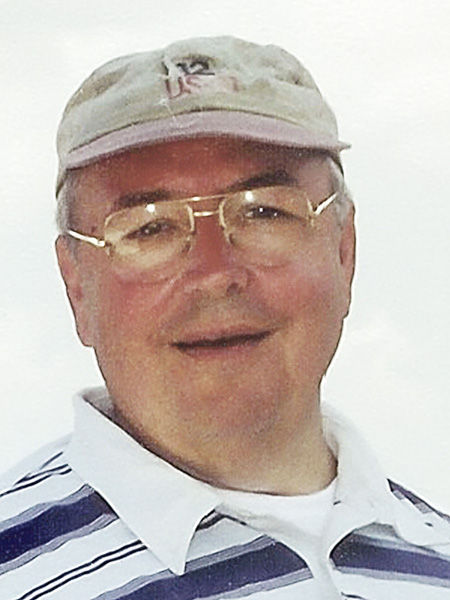
The Town of Bourne has lost one of its most highly respected public servants.
William J. Ware died on Wednesday, March 25, around noon at Cape Cod Hospital after suffering a heart attack last weekend. He was 77 years old.
A 1959 graduate of Harvard University and 1964 graduate of Harvard Business School, he brought a lifetime of business knowledge and experience to several local committees, including the Bourne Capital Outlay Committee, the Bourne Landfill Business Model Working Group and the Bourne Public Works Facility Building Committee.
Mr. Ware was born on December 8, 1937, in Glenn Ridge, New Jersey. While he grew up in New Jersey, his family kept a summer home in Cataumet, the same home that he and his wife, Susan L., have lived in for nearly 20 years.
Mr. Ware’s wife said that she and her husband met through one of Mr. Ware’s close friends, Edward Hickey of Scraggy Neck Road, whose sister was friends with Ms. Ware.
They married in 1963 and had four children: Elisabeth P. Ware, 50, of Seattle, Washington; Anne C. Schaefer, 49, of Ware; Mary L. Ware, 46, of Norco, California; and William J. Ware Jr., 46, of Hanover, New Hampshire.
As a student at Harvard University, Mr. Ware was a member of the university’s Speakers Club, the Hasty Pudding Club and the sailing team. At the time, he was also part-owner of Café Capriccio in Harvard Square.
After college, he served as a lieutenant in the Navy and the Navy Reserves. In 1964, he earned an MBA from Harvard Business School, and throughout his professional career he worked as a management consultant in the United States and Europe. His family said he had a lifelong love of boating and loved racing with the Buzzards Bay Yacht Club.
Bourne Board of Selectmen chairman Peter J. Meier said that when he was first elected selectman back in May 2011, one of the first people to reach out to offer assistance and advice was William J. Ware. At the time, Mr. Ware was a member of the Bourne Capital Outlay Committee.
“He came to me and said, ‘You’re going to have a lot thrown at you all at once. Feel free to reach out to me,’ ” Mr. Meier recalled.
Mr. Meier said that whatever committee Mr. Ware worked on, there was a respect he commanded just by walking into a meeting room.
“He was always one to crunch the numbers. He was fiscally conservative and did what was in the town’s best interest,” he said.
Mr. Meier recalled that Mr. Ware had a special way of communicating with people, often challenging those who came before the capital outlay committee with funding requests.
“He was a great negotiator, and he would often ask, ‘Do you really need this?’ ” Mr. Meier said.
Mr. Meier said that he never served together with Mr. Ware on any town committees. He did, however, appoint him on several occasions.
“I learned to depend on him when I had pointed questions about issues,” he said.
Being challenged by Mr. Ware was the most enduring memory of Daniel J. Barrett, general manager for the Department of Integrated Solid Waste Management (ISWM). Mr. Barrett recalled the first time he encountered Mr. Ware was at a capital outlay meeting. At one point during a presentation by Mr. Barrett and ISWM environmental manager Philip A. Goddard, Mr. Ware interrupted and questioned both men vigorously on some expenses.
“He was all over us. I was like ‘Who is this guy?’ ” Mr. Barrett said, admitting that he left the meeting a little angry.
Later, Mr. Ware took the time to introduce himself and explain his concerns, Mr. Barrett said. The two would eventually work side by side on the Landfill Business Model Working Group, and their relationship developed into a great friendship, he said.
“Lots of respect. One of the best guys I’ve dealt with in this town,” he said.
Mr. Barrett added that news of Mr. Ware’s death “broke my heart.” He mentioned that Mr. Ware had been a private businessman and brought a positive impatience with him to committee meetings. He described Mr. Ware as “tenacious,” “very intelligent” and someone with little tolerance for how long it takes municipalities to get things done.
“He added the element of pushing us. ‘Why is this taking so long?’ he would say, and we welcomed that,” he said.
Bourne selectman Donald J. Pickard also served on the business model working group with Mr. Ware. Mr. Pickard recalled Mr. Ware’s excellent business sense.
“His evaluation of the Covanta ash contract and potential land lease to Harvest Power was essential to the business model working group,” he said.
He added that Mr. Ware’s focus was always on what would generate the most revenue to the town.
Mr. Pickard confirmed that Mr. Ware liked to move things along, particularly when it came to committee meetings. He noted that meetings for the working group generally began at 6 PM, and Mr. Ware preferred that the agenda move along promptly.
“Especially if there was a ball game on television that night,” he said.
Mary Jane Mastrangelo, chairman of both the capital outlay committee and the Bourne Finance Committee, said Mr. Ware’s death came as a shock. She mentioned that he had just attended a capital outlay committee last Thursday. March 19.
“Completely unexpected and a great loss to the community,” she said.
She said that Mr. Ware’s value to the committees on which he served lay in his extensive experience in business operations and turnarounds.
“He had great vision of how to make things better and make things work,” Ms. Mastrangelo said.
Mr. Ware’s son said that the family is in the process of scheduling funeral arrangements. He said that in lieu of flowers, the family has requested people make donations to the Bourne Community Boating, PO Box 3157, Bourne, MA, 02532.
Source: The Bourne Enterprise, on-line

